
Showing posts with label book thoughts. Show all posts
Showing posts with label book thoughts. Show all posts
Monday, January 14, 2019
Reading Recap 2018

Wednesday, October 10, 2018
Nella Larsen: Two Novels, Three Stories. Full Stop.


Wednesday, October 3, 2018
J.D. Salinger: One Novel, Three Novellas, Ten Stories

Here is Salinger's canon in order of publication date:
The Catcher in the Rye (1951)
Nine Stories (1953: stories from 1948 [3], 1949 [2], 1950 [1], 1951 [1], 1952 [1], 1953 [1])
"Franny" (1955)
Raise High the Roof Beam, Carpenters (1955)
Zooey (1957)
Seymour, an Introduction (1959)
Although I've read it, I've not included the posthumous book Three Early Stories (2014) in this list and discussion as they were written before Salinger's participation in the war, before he published in The New Yorker, and before the appearance of the Glass family. A fourth novella, Hapworth 16, 1924, appeared in June 1965 in The New Yorker, but has never been published in book form. This piece seems like it should be part of the canon, it would be the earliest chronologically in the series, written when Seymour was seven, but the Estate has not seen fit to make it available. I haven't read it.
Salinger believed there was a certain virtue and innocence, a refuge to be found in childhood. His vision was that the natural state becomes corrupted as we grow older and we're beset by trials and complications. We're each a genius when we're young, like the Glass children who were all precocious child prodigies, but then descended into marred and flawed adulthood. Salinger searched for that perfect, child-like moment of goodness and purity, that overwhelmed Holden and Seymour when they saw it. This was an ineffable moment, an epiphany, that for those few seconds freed the observer from adulthood. Holden watching Phoebe sleep, Seymour seeing his sister with a kitten. But that moment is almost too much to bear, like drinking from a fire hose.
The Catcher in the Rye was Salinger's masterpiece and one of the most beloved (and, I suppose, hated) novels ever written. If he'd had a time machine I believe Salinger would've gone back and linked his only novel more clearly with the Glass family, the clan that absorbed him for the rest of his life. Nine Stories and "Franny" (which is genius!) are equally brilliant and as charming as Catcher, demonstrating that Salinger had reached his goal of mastering the short story (or at least The New Yorker story). But at this point, when he writes his three (or four) novellas, Salinger begins to descend into the mad obsession that is the Glass family. Here he can live in a world he controls, can live happily in his family of the mind. Each of the novellas is less charming, less winning, more uncomfortable, more annoying, and distinctly more self-indulgent. Not that there aren't lovely and rewarding moments in each, but for me and anyone who's not a die-hard Salingerite, they are less valuable. In Raise High, Buddy Glass spends most of the tale talking about Seymour (good), and awkwardly, uncomfortably, and somewhat pointlessly dealing with hostile wedding guests (not so good). In Zooey, the title character spars with his mother while he sits in the bath (mostly good), and then annoys his sister Franny who's having a nervous breakdown (mostly not so good). Finally, in Seymour, Buddy Glass introduces us to his brother (good), but also goes on a lark and a detour about a number of issues which seem to have interested Salinger more than having much to do with the Glass family at all. But despite my difficulties with the novellas, as the keys to the Glass family, Salinger's private kingdom, the novellas are necessary as water. For those who succumb to Salinger's cult and drink from the Glass cup, the novellas are holy texts. Salinger has his flaws, he's self-indulgent, he'll go on too long sometimes about any topic that interests him, as about religion in "Franny" and Zooey. But he knows he's going on too long, it's intentional, and he just can't (or doesn't want to) help himself -- it's what he wants to say, just as Zooey goes on forever baiting poor Franny in the living room. He can't help it. It's how the story must be told, and that I can understand and accept. 🐢
Friday, August 10, 2018
Elena Ferrante: The Neapolitan Quartet

Monday, April 23, 2018
Thoughts About Reading ... #4

First, I wonder does your Myers Briggs defined personality determine what you like to read? For instance, would a INTJ personality type enjoy plot-driven fiction or nonfiction, while an ESFJ likes cozy, mushy prose? How about political leanings? Do members of one party read caring, sharing, and helpful books, while members of another party not read books at all? I know there's a blood-type diet, but I have trouble imagining that a book subscription service could make a fortune that way. And I'm kind of surprised in this era of cyber info hoarding that readers aren't having our reading tastes sliced and diced, or are we?
Next, how come there are books that are admirable and brilliantly written, but just aren't a lot of fun. Yes, I'm looking at you Toni Morrison. She's great in the real meaning of that word. She's perhaps the greatest American author of our time (don't forget that Nobel Prize), but her books are a good read on a whole 'nother level than Attica Locke. It's like Morrison is me eating my veg and taking my vitamins, while Louise Penny's books are dessert. Shakespeare (like Toni Morrison) is a great writer, but his plays are work! Some of the classics just aren't very enjoyable to me on a shallow level. I can recognize the greatness, appreciate the quality writing and the important themes, but they don't always keep me on the edge of my seat. Lately I've been thinking of reading William Faulkner and I'm afraid that ... .
Finally, I was reading several of Shakespeare's plays and found the Folger series was the most accessible and helpful for me. There may be other series geared more to PhD candidates, but these are excellent for the common reader. Take a look. They have the notes on the facing page, which is brilliant, there are occasional illustrations, and also essays front and back. The trade paperback size is nicer than the mass market size, with better paper, larger font, and still quite reasonably priced. Unfortunately Folger don't seem to be making the trade size anymore, so you may have to scout out thrift stores and charity shops. And yes, Mr. Folger was related to the coffee people, but not to their money.
Well, that's enough thinking for now. See you soon! 🐢
Monday, April 16, 2018
National Poetry Month 2018!

Wednesday, January 3, 2018
Best Reads of 2017!!!

Fiction: My best novels published in 2017 were Autumn by Ali Smith, and Lincoln in the Bardo by George Saunders. Autumn had a prickly and somewhat unlovable main character (always a good thing), but was a subtle & delicately drawn book that I enjoyed. The key for me was the beautifully created relationship between a young girl and an old man. Perfect. I'm sure some of Lincoln in the Bardo went over my head, but I still recognized quality writing combined with ineffable creativity. Loved the weird! From two of my old favorites, wonderful were Memento Mori by Muriel Spark and Dark Tales (Penguin's new collection of previously published stories) by Shirley Jackson. Also read Invisible Man by Ralph Ellison. Blew my mind! American history as it needs to be understood.
Nonfiction: I went in for some books discussing American race relations, and they were fantastic. We Were Eight Years in Power and Between the World and Me by Ta-Nehisi Coates were both amazing. At only 43 (as of last Monday) he's still a young man, and I expect so much more from him. I think he has the chops to justify my great expectations, to be the next James Baldwin (and that's not a black comparison, I can't think of anyone greater than Baldwin). I also read Baldwin's I Am Not Your Negro, which I only mention to praise the documentary of the same name, because it's required viewing and I wish every high school in America had 10 copies. Two quick additions: (1) Look for the poem "They Feed They Lion" by Philip Levine, the same sentiments in poetry; (2) Things Fall Apart by Chinua Achibe, which, although fiction, made me understand the effects of colonialism like nothing I've ever read. Lost in the shuffle was Mary Dearborn's biography of Ernest Hemingway, which told me more about the American author than I expected to ever know, and revealed the man had far more issues (beyond toxic masculinity) than we ever knew.
Poetry: Disappointingly, I didn't read much poetry this year. Two of my favorite poets died in 2014 and 2015, and their final works were published in 2017. I read three books by Philip Levine, and though his books aren't always consistent, he writes individual poems that just kill me. Bill Knott had a life-long collection of his poetry published, I Am Flying into Myself: Selected Poems 1960-2014, which has many of his brilliant and bizarre poems. A worthy commemoration of a largely unknown career. I also read Devotion by Patti Smith, which was a memoir about writing and creativity, and made me want to delve into her poetry in 2018. Also have to mention the gargantuan tome of Sylvia Plath's letters. Too large to actually read, but dipping into her letters reinforces what a talent she was.
Classics: A big year for classics. Read ten of Shakespeare's plays, which I didn't think I could. I got a lot more out of them than I thought I would, and was amazed how Shakespeare wrote so far ahead of his time, addressing race (Othello), anti-semitism (Merchant of Venice), and humanity in general. Beloved wasn't fun, but shows why Toni Morrison deserves her Nobel. Read most of Austen and the Bronte sisters, which reminded me how much I like their books. Okay, Agnes Grey by Anne Bronte is not a favorite, but her Tenant of Wildfell Hall is fantastic.
Forgotten Gems: Stumbled on two (new to me) authors, one Chinese (Qiu Miaojin), one Mexican (Juan Rulfo), this year, which emphasized how much undiscovered gold is out there. Both had tragically little output (Qiu suicide, Rulfo, politically self-imposed censorship), but Qiu's Notes of a Crocodile and Rulfo's Pedro Paramo were highlights of my year.
Read a short story at the end of the year, "Cat Person" by Kristen Roupenian, which was a breath of fresh air -- decidedly contemporary, and so decidedly creepy in its own way. A good, maybe not great, year in reading. 🐢
Monday, January 1, 2018
2017 Reading Recap!!!

Friday, December 8, 2017
Thoughts About Reading ... #3

First, I'll tell you somethin' for nothin' -- perfection is overrated. The sooner we accept that, the happier we'll be. Aiming to be better, doing the best you can, even trying for perfection, all good habits. But if we expect perfection (in ourselves or others) we should also expect disappointment. Besides, perfection is boring: bumps and dents and a barnacle or two are just what make life interesting. And tolerable. Before you think I'm auditioning to be a self-help writer, here's where I'm going with this: let's not expect perfection from authors, even our favorite writers. Lets be tolerant of a few weak spots, give authors the room they need to experiment, to try new things. Give writers the freedom to fail. Even the greatest writers have flaws; let's concede that there are few perfect books. Artists need to reach for something they can't quite grasp. If we judge too harshly, the alternative is repetition, the same old thing, and the disappearance of daring. A little tolerance goes a long way.
Next: Don't mess with my reading! The last thing I want is sanitized fiction. I don't want anyone shutting down an author who dares write a hateful character. The word of the day is "problematic." Tell me a book or author is "problematic," and I'll still have to decide for myself: no one's doing my thinking for me. I have to reach my own wrong opinions. I want a few bigots, jerks, some nasty jokers, and few generally ignorant idiots in my books. We can't ignore the bad elements of life and we can't fight bigotry and prejudice if we don't identify it. Every year during "Banned Books Week" we hear about all the books that people were told not to read because they were "problematic." Social media bullying is the new "Banned Books Week." Everybody who discriminates (including railing against some hapless author) thinks they're doing it for a good reason. Next time you hear a book is "problematic," don't let that stop you if it's a book you want to read. You may learn there's a vast chasm between representation and endorsement, and context is everything. Today some readers are more interested in finding some trivial way in which a book is less culturally sensitive than they judge it should be, than in trying to learn what the book is saying. Some are competing to be the most culturally sensitive -- the world is culturally insensitive and that's going to creep into books. I really don't want either Big Brother or those who are "more sensitive than thou," to be the mama bird that predigests my reading for me. Whew! Rant over.
Finally, I want to mention that rare intersection of the Venn diagram that is educational and entertaining, which is The Cartoon History of the Universe by Larry Gonick. The series is up to three volumes now (hey, it's big subject). I've read the first two volumes and learned more than I'd like to admit. Graphic history is cool. Gonick has published graphic histories in a variety of areas; if the others are anything like what I've read, they're awesome. These books are perfect for teenagers (older teenagers for parents who turn a blind eye to the world we live in) and all adults. But even more than simply imparting knowledge, graphic histories also have the potential for inspiring interest, passion even, in the subject matter and learning in general. One good graphic history could turn you, or your aimless, unmotivated, slacker child, into a college-bound future scientist of the world. Go for it! 🐢
Monday, October 16, 2017
Thoughts About Reading ... #2

First, I've found that the New York Review of Books reprint series is brilliant! I now buy anything with their distinctive layout pattern and the oblong "nyrb" logo on the spine. This despite the fact that I've heard of almost none of the books they publish. This reprint series is largely dedicated to forgotten, out of print, cult, lost, little or never known books that are of fantastic quality. Often they're books considered "meaningful." Usually fairly short. So far they've not let me down. Most of them are books originally printed in English, but a goodly number have been newly translated from other languages. There are a few books by big names: Dante, Balzac, Chekhov, mostly their lesser known works, but there are many more by authors I've never even come close to reading. It's wonderful finding a publisher that I'm willing to take a chance on anything they print -- much like finding a Penguin title in a used-book shop. Maybe what I like best is the voyage into the unknown, entering the book (and author) blind, not knowing what may happen. I admit checking the copyright date before beginning, though. (No, this was not sponsored. Are you kidding?)
Next, I've started "reading" plays, and I'm not sure what I think about it. Plays are difficult to read and review. A play is intended to be performed and heard aloud, where the viewer is part of a group, experiencing both the play and the audience simultaneously. The actors and stage are part of the work, as is the crowd. In fact, most plays change significantly between the writing and the performance, as the logistics of presenting the play can have a dramatic (dyswIdt?) effect on the substance of the work. A play is not meant to be a silent, private experience, alone with only pages and a cup of coffee. As such, I think it's best to watch a production or two, even if only on YouTube, while reading a play. What is unpersuasive when cold on the page, can be contagious on the stage, as I've found out to my delight.
Finally, having read quite a bit of Austen and the Brontes lately, I must comment about commas. Commas were doubtless much less expensive in olden times, as they were thrown about quite carelessly in the 19th Century. Five commas in a phrase is nothing to these comma-thrifts; two semi-colons and half a dozen commas in a sentence is commonplace. This punctuation overload can endanger the reader's safety and sanity with clauses and parentheticals just bouncing everywhere. I'm reasonably sure that Mrs. Austen was wont to say: "Careful with those commas, Jane. You could put someone's eye out!" I figure this all must have changed during the world wars when everything was rationed: sugar, coffee, and, apparently, commas. Fortunately, today there is a much less danger of becoming stranded in a series of semi-related sentence fragments, or being winged by an errant piece of punctuation.
Well, I seem to have just about run out of thoughts now, so it's time to print a turtle and say farewell till next time. 🐢
Wednesday, September 27, 2017
Return of Banned Book Week 2017

As mentioned above, no books in our society are actually banned. Any real limitation takes place at the publishing level where certain books simply don't get accepted for publication. But self-publishing is still available (see Joy of Cooking, The Martian, A Christmas Carol). So really this talk about "banning" is somewhat exaggerated. But only somewhat, as I see the hysteria of Banned Books Week as a bulwark against censorship yet to come. As recently as the 1960s efforts were made to actually ban books in the U.S. Other countries still have banned books. I see First Amendment warriors as pushing Banned Books Week with such enthusiasm to maintain a weapon for use against any future government effort to actually ban a book. Can we say, in times such as these, that it's impossible? So "thank you!" to those who stand on guard today, for that tomorrow when the book burnings start. 🐢
Monday, September 25, 2017
Banned Books Week 2017

The most common books bans are for being age-inappropriate. These are partial bans that restrict a book from people of a certain age or at an individual school, when people can still obtain the book, just not quite as easily. While it's worthwhile debating such books and the gray areas they create, probably a majority of people would agree that some books should be kept from some children; in our society we try to protect children. At least from sex. Usually we keep "dirty" books from children, such as Catcher in the Rye. In the past, we've also tried to protect adults from literature that's a little too sexy. This has happened with notable literature such as Lady Chatterley's Lover, Ulysses, Lolita, A Farewell to Arms, and even a poem, Allen Ginsberg's Howl. Today it seems unlikely that much is censored from adults for being too sexual, but the church will try, because religious censorship is another huge force in the world of book banning. After obscenity (too much sex), the next big category for religious censorship is blasphemy such as The Satanic Verses, Candide, and (believe it or not) Carrie, The Da Vinci Code, and Animal Farm. Even Faulkner's As I Lay Dying was censored for questioning the existence of God. But I could've written that as "god." Given the theocracies that still exist in the world, there's an overlap between religious and political censorship (see above, The Satanic Verses). The biggest political book banners are dictatorships and other authoritarian regimes. That means books like Animal Farm, Dr. Zhivago, The Master and Margarita, and probably anything written by Alexander Solzhenitsyn. Yet even The Communist Manifesto and Mein Kampf have been forbidden in democratic countries. While there are other categories, one last common reason relates to "lifestyle," such as novels portraying homosexuality, drug use, or promiscuity -- a bewildering combination. I'll make no suggested reading for Banned Books Week, because every week is banned books week. 🐢
Friday, August 11, 2017
Good Readers Reading Good Writers

Approach #1: Accept the author's language. Many good writers will use elevated or unusual language, quite different than you may usually read in contemporary, genre, or more plot-driven books. One time I was looking at the sentences in The Three Musketeers (I think it was) and became quite cross as I realized I could consistently edit his sentences down to half as long. Or less. What a waste of words, what sinfully sloppy and sprawling wordiness! Obviously Dumas had never heard the excellent axiom to "omit needless words." He had boatloads of needless words! When I encountered A Clockwork Orange, I found Anthony Burgess had invented his own language (called "Nadsat"). Well, this was totally unfair. We had Spanish, not Nadsat, in school. Si? But in a chapter or two I'd caught on and the novel was just as horrifying as it was meant to be, even in its own unique dialect. Don't fight the language (even Jane Austen takes some getting used to). Accept it, assimilate it, learn to read the book in its own way. You'll soon find it's not that difficult. Good readers learn to read the writers' style, and don't expect the writer to change her style for the reader (they're often dead by now, anyway). A handy addendum to this is to get a dictionary app -- it'll make reading easier and quicker.
Approach #2: Read for the time. Here I'm not talking about historical fiction. In such books the author often carefully spoonfeeds the historical bits for the non-historical reader. I'm talking about that Austen wrote in the early 19th Century, Fitzgerald wrote in the 1920s. Times were different then, and the reader will not fully understand such novels without some knowledge of the times in which the books were written. There are many annotated editions of Austen to provide the reader with the secret anachronistic knowledge. Less so for Fitzgerald. So don't expect to fully comprehend The Great Gatsby without some knowledge of American history up to the 1925. Sorry. You may still enjoy it without any knowledge, but more likely it'll be a bit opaque in places as you have no idea what F. Scott is talking about. This is especially true because The Great Gatsby is about the American Dream. The reader needs some of that American stuff. (Just as some knowledge of the British world makes Terry Pratchett much better reading.) Think of books as wee time machines: you're going back in time to the book's writing; life will be a little unusual for you there.
Approach #3: Read for the author's intent. In good literature, sometimes the author is only writing for herself. Don't expect the author to come to you or make it easy. While reading, try to figure out what the author is trying to say, what is the author trying to do, where is the author coming from? Austen can be read as a simple purveyor of romances, the reader can easily just gasp and sigh over Elizabeth and Darcy. But Austen was doing more than that. A good reader will also be looking at what she's saying about society: about the class system, women's rights, economics (and I'm not even talking about those critics who mistakenly argue that our dear Jane was a Tory, Jacobin, radical lesbian, or Brexit supporter). Many good writers write much more than plot, and focus more on the characters -- so what about the people in the book? Many good authors want to talk about psychology, morality, philosophy, religion, and more, and often use their characters to do so. They just often like to put the good stuff between the lines or in the background (lurking in the shadows). Identifying what the author really cares about will make books even more rewarding. Think of the plot as a treat or inducement to listen to what the author really wants to talk about, what the author has on his mind, what the characters are saying or thinking.
These are just a few habits of good readers when faced with a good writer. Another is to slow down. You can't read every book like The Prisoner of Azkaban where you're figuratively dying to get to the next page. Read a little slower, a little more carefully, and see what sinks in to the little gray cells. Accept the book for what it is. So enjoy and good reading! Literally. 🐢
Monday, July 31, 2017
Jane Austen: Six Best Novels

Austen's novels have been criticized (severely, see Twain, Mark) for being simple novels of manners, white women worrying about getting married (due to Britain's eternal wars the pool of men was small). And while sometimes Austen does seem blind to social conditions (so few servants ever have names), at others, even if she's no Dickens and it's hidden between the lines, the social and economic desperation is laid bare. Good family was still essential, even in the social norms were changing. Many young women were a sound marriage away from disaster, poverty or starvation. That's why Lizzy Bennet is so brave to reject Mr. Darcy. That's why Charlotte Lucas willingly marries the odious Mr. Collins: her options are few and security, a roof above and food on the table, is more valuable than love, than being an impoverished spinster. Austen herself was not as wealthy as her characters. Although Austen's works aren't the unrelieved satire her most fervent supporters would assert, her gentle satire (okay, sometimes vicious, though on the individual and personal level, skewering the rude, hypocritical, spineless, and yes, hypochondriac) was one of the sharpest tools in her belt. There's a pattern of twisting Austen's writing to suit personal objectives: she was conservative, she was radical, she would've supported suffrage, she would have opposed it, she would have pushed for Brexit ... . But what is best about Austen in that her stories are fairy tales, with a moral, with rules that have penalties, a world without sudden deaths, we know evil will not win, and there's always a happily-ever-after. Her novels are also intelligent, her characters having well-rounded interior and exterior lives, examining and knowing themselves and others. Reading her novels we do the same, living within her world and within ourselves, for just a little while. 🐢
Thursday, July 6, 2017
Chinese Author Qiu Miaojin and What Might've Been
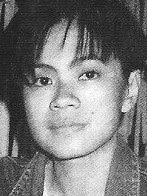
Notes of a Crocodile is the more conventional novel. An 18 year old university student, and her circle of misfit friends, trying to move through youth, sexuality, and first love, overthinking, feeling emotions too much, too proud, too weak, all the trappings of being a teenager, all complicated by a society in which these feelings by these people, are forbidden.
Last Words, the story of the dissolution of a love affair, is powerfully written, but overwhelming, it's just too much. There's no plot, no growth, no lesson learned. And it's too close to what I wrote in my diary at 17. It's more a tour de force, proof that one can write about a breakup for the length of a book, an endless howl of pain and desire. The narrator (Zoe) states that it "won't be a great work of art, but it could be a book of true purity." I agree, perhaps great almost as a work of performance art, but more so a pure book, pure in its unwavering commitment to her feelings. I could see it a perfect read for high school, maybe even university students, whose limited experience makes them more easily swayed by emotion. At one point in Last Words the narrator imagines writing a novel called Last Words to Those I Loved Deeply. That would've been an equally good title.
The actions of Zoe, the protagonist of Last Words, suggest that she may have histrionic personality disorder. The characteristics of that condition are constant attention-seeking, emotional overreaction, and suggestibility. A person with this condition tends to over-dramatize situations, which may impair relationships and lead to depression. That the author seems to find no fault in Zoe, makes it possible that Qiu herself may have had such feelings, with overreaction and depression assisting in her suicide.
In Last Words, Zoe states, "an artist's work only really moves me if the artist has suffered through profound tragedy and death -- only then can greatness be achieved." Putting aside how we know what an artist has suffered, this quote suggests that Qiu may have felt that she had to kill herself to legitimize her art. Or was it the same longing for death because of a broken love affair that possesses Zoe.
Given the number of Japanese writers, including Haruki Murakami, Yukio Mishima, and Kobe Abe who are mentioned in both her novels, Qiu seemed to be heavily influenced by the literary connection
between love, death, violence, and suicide. Perhaps reading the works of her Japanese novelist mentors also had an effect on her view of life. And all of this was distorted by the condemnation of homosexuality in the Taiwanese culture.
Lesbianism is too essential to her first novel not to be mentioned, but in her second book that the narrator is a lesbian is almost incidental, it's simply the story of human beings in pain. As noted in her second book, "The word 'lesbian' is a term that is really only meaningful in political contexts." In the first book the context is clear, in the second it is clear and present, but no longer essential to a writer who was no longer writing simply about a niche in society, but about the feelings of all people, about love, pain, desire, and who we all are. Where Qiu Miaojin might have gone with her next book, we can't imagine, it isn't for us to know. From the scant evidence of these two books (and the urgently needed additional writings mentioned above), I can say that Qiu future works would have commanded a diverse and inclusive audience, and been something we would have been the better for having read. 🐢
Tuesday, June 27, 2017
Juan Rulfo and 100 Years of Modern Mexico

Before I begin sharing my thoughts and opinions, let me make my caveats. I am not an academic, I am not Mexican, I did not study Rulfo's works in school. I am an outsider. But even in this era that worships the sanctity of "own voices," I believe the viewpoint of the outsider still has value, seeing from without what the culture may not see from within. When one is arguing the universality of a regional author, as I am doing, the value of the outsider's viewpoint increases in purpose. I am simply someone who loves Mexico and the Spanish language.

Rulfo might be called one of the "novelists of the Revolution" (as, more accurately, was Mariano Azuela), since he somewhat frequently mentions the Mexican Revolution and the Cristero Rebellion (La Cristiada) in his fiction. But he doesn't fit there, as these references are only part of the verisimilitude, showing the reality, the context, as one must mention cars when writing about American life. He isn't writing about the Revolution, he again is writing about more basic and common elements of life and humanity, even in the midst of endless war.
With any of Rulfo's work, the reader can't help but realize that the author was heavily influenced by Gabriel Garcia Marquez. Except he wasn't. Garcia Marquez had examined Rulfo's work in depth. When he first received a copy of Pedro Paramo, he read it twice in one night, and then repeatedly until "I could recite the whole book, forwards and backwards." After studying Rulfo, Garcia Marquez acknowledged that he had found "at last, the way I sought to continue my books." Of course Garcia Marquez was Colombian, not Mexican, and influenced everyone. I don't think it's too much for me to claim, given the words quoted above, that Rulfo's influence is far more general than commonly thought. He's not just a regional writer.
Rulfo goes far beyond his native Mexico, to address the emotions, fears, concerns of every person. By writing of, and then leaving the local, the regional, the specific behind, Rulfo brought Mexican writing into the modern era, and made it international writing. His work is really of love, hate, revenge, sin, fear, what we all encounter, feelings we all have. Although the novel Pedro Paramo may have been born in El dia de los muertos (the Day of the Dead), Rulfo's writing of memories, ghosts, death, Hell, and histories, are elements that affect all people, from whatever country. We all face life, our memories, our death, and Juan Rulfo, in fiction, brilliantly does the same. 🐢
Saturday, June 17, 2017
Thoughts About Reading ... #1

Often I think about why I'm not reading. It's kind of like wondering why I'm not eating a cookie when I have cookies in the cupboard. I could read more if I didn't get caught up in other, less interesting things, but I do; I'm easily distracted. Or even when doing bookish things such as hunting through bookstores, I could be at home reading the books I have, instead. I should be more disciplined, but I don't want reading to become a chore, something I "have" to do. I always want to have a bit of that reading hunger, if you know what I mean. So I'm fine with a couple days between books, or missing days of reading now and then. Life occurs.
One thing I don't do is worry much about how many books I'm reading. Sure, there's lot of books I want to read, but there's only time for so many and I'll get to them when I can. I can eat only one cookie at a time (unless I stack them up and then shove them ... never mind). Many people read much faster and many more books than I do, and that's fine, too. We each read at our own pace and depth. I can't worry about how many books other people read. My mother used to say, don't look at anyone else's plate, don't worry about what others at the table are eating, you just watch your own plate. Good advice for life. I do have a goal of books I'd like to read this year (ever the optimist!), but if I don't make that number, life will go on -- it's not a problem, first world or otherwise.
What I could I be reading? That's something I do think about a lot. Even while reading. It's like eating a sandwich while thinking about eating a burger. What's with these food similes? For instance, in the last couple weeks I've discovered two new (to me) authors, Qiu Miaojin and Juan Rulfo, and both were brilliant. So I immediately want to read more by them (sadly neither was prolific, Rulfo writing two or three books and Qiu about the same). But I also made a trip to the library and picked up an armful of reads from the New Book shelves. Those darn Russian authors are always nagging me. And I need to complete my reading of Austen and the Brontes. How many hours are there is a day? Is sleep truly necessary?
So those are my reading thoughts for today. Trying to keep on with the reading, not worrying about how many books others read, and pondering all the books I do want to eat ... I mean, read. 🐢
Thursday, June 15, 2017
The Death of the Author

My issues with DOTA are several (I'm sure all my quibbles have been addressed before in much larger words and with many more footnotes). First, it seems artificial. We're going to evaluate a literary work, but first let us put on blindfolds and pretend that the author never existed. We have a novel, where and when did it come from, why is it in German, is the author female or male? Who knows? Not us. We're going to make believe there is no author, despite the loads of information we may know, because DOTA tells us to. Why intentionally handicap ourselves and put on blinders? Isn't literary analysis difficult enough without tying one hand behind our back? Like ice skating with bricks instead of skates, it just seems an affectation.
Next, it seems extreme, even if it aligns with the Literature Major Full Employment Act. Sure, what the author says about his work is not definitive and often may be misleading. I believe reading fiction as autobiography is usually a mistake and usually wrong; there's just too much we don't know (subject for another day). I don't subscribe to author worship. Authors making self-serving statements? Of course they do. In retrospect any number of authors have realized they're geniuses, and have the interviews, articles, and memoirs to prove it. So no, I don't take an author's statements at face value, and authors are often the worst person to explain their work. But it's extreme to throw everything the author says out the window, and the critics and academics, much like today's current crop of politicians, are not doing their job. It's an academic's responsibility to determine how much weight to give an author's stated intentions. A little? A lot? None? When was a statement made? How persuasive is it? A scholar's job is to determine what biographical or historical information, if any, we're going to include. That's part of the work, not just throwing up our hands. It's like a detective saying, we will not look at any information regarding the victim, let's make believe there is no victim. Now, let's solve the murder.
Following along with this, DOTA denies agency (another academically mandatory word) to the writer. A writer talking about the refugee experience may find she was actually explaining her sibling rivalry. Authors' ideas are not their own, everything is in the province of the reader. So whatever Barthes intended in his essay is irrelevant, it's only my opinion that counts.
Fourth, it's a bit of an oxymoron. DOTA decrees that the author is dead, hence the clever appellation. But we have loads of dead authors. Graveyards, anthologies, and ivory tower classes are full of them. Scholars spend a great deal of time excavating the detritus of dead authors, searching old attics, old trunks, old relatives, perusing letters, diaries, marginalia. Then the academics go off to write earth-shattering biographies full of new revelations that shed halogen-bright insights into the long-dead author's work. Well why are they doing all that, if the text speaks for itself. Wasting their time, apparently.
Finally (I could go on, but I already have), we lose so much by sticking strictly to the edicts of DOTA. Let's say a woman over 50 has enclosed a poem in a letter to a friend. In the poem is the line, "invisible, I step off the sidewalk," and in the letter is the line, "No one sees women my age, ah to be 20 again." If some academic, relying only on "the text," goes on to write about how our urban, mechanical society endangers people crossing streets, we're not helping anyone. If, after reading a poem about a sculpture, we later learn the name of the specific work, are we not to look at a photo of that sculpture? How does ignoring the sculpture add anything?
Hope you enjoyed my rant, all meant in good fun, from someone who enjoys reading using all my senses, all my faculties, all the tools available. I'm not giving up any of them. Happy reading. And where is Jacques Derrida when you really need him? 🐢
Monday, April 17, 2017
Good Writers / Bad Readers

Here are a few of the techniques good writers use that frustrate Bad Readers: (1) Changing the point of view, switching narrators, jumping from one head to another; (2) Bouncing around in time, we're in the past, the future, the present, no, the past again, flashback, is this the same book, flash forward, help me! (3) Creating unlikable characters: is our heroine a spoiled, snobby brat? Does a character make disgusting racist or sexist statements? Is our protagonist kind of too stupid to live? Is the bad guy a violent, sadistic troll? (4) Throwing in so many big and odd words that your phone is always on the dictionary app; (5) Long, slow stretches where nothing seems to happen. Any of these sound familiar? Bad writers could be guilty of all these infractions, absolving you as a Good Reader of all blame, but here I'm talking about good writers.
Let's look at those first two troubling techniques, changing narrators or writing without a linear chronology. Both of these require the reader to put a little work in, primarily to focus and pay attention. A good writer will put in enough little clues, signposts, to let the reader know who's talking or where we are in the story's overall timeline. Look for the clues, get to know the signposts, get deeper into the book. If you're a younger reader, you may want to come back to books like these in a few years. Unlikable characters? You're just not going to like everybody. Is Snape your buddy? Who likes Mr. Wickham? But, you say, what if there are no likable characters? At first no one likes coffee (more cream! more sugar!), but then it becomes an acquired taste. Same with unlikable characters. A good writer will make her characters interesting, even if unlikable, and draw the reader in that way. There should be tension, friction, anticipation. Will this unlikable character be punished (this is where the word "comeuppance" arrives)? A good writer can fill a book with unlikable characters, because life can be just like that. Not everything is unicorns, rainbows, and pixie dust. When you can read a book in which you don't fully identify with any of the characters, you'll know you're ready to drink coffee. Next, too many big words. Here I tend to agree with critics of writers who show off too much, and for me it's a thin line between education and pretension. You may have to make your own decision whether the writer is throwing out words that perfectly describe the situation, or are just throwing the reader out of the story for no good reason. But it's also good to learn, and good to increase your vocabulary. I just don't like books that are too much like medicine. Again, it can be a fine line. Finally, long, slow, and boring. If it is a good writer, the reader has to be alert for subtlety, and ask questions. Is the story going inside a character's mind, is the writer explaining a motivation, setting up a future scene? Perhaps the writer is sharing her philosophy, and especially in older books this was a widely accepted practice. Hint, try skimming. In Moby Dick, Melville included long non-fiction sections on the nuts and bolts of whaling. Some readers love those parts, for the rest, skimming. It won't affect the story. And you'll still be a Good Reader. 🐢
Saturday, April 15, 2017
Reading Classics

Of course not all classics are created equal. Some books have stayed in print simply because of other greater books by the same author. I'm not sure all of Thomas Hardy's books are equally good, but most can still be found pretty much. Write one great book, you'll have a better chance of keeping your other books in print. We tend to think of "classics" as profound, difficult, and sagacious, but some novels have lasted just because they're a good yarn. Dumas could rip out a darned good plot, but I'm not sure he reaches the same depths as Eliot, Tolstoy, or Kafka. Or is that just the snob in me sticking its snout out of the mud?
I like thinking of classics as wee time machines. As so many were contemporary novels, they take me back to the time they were written, to see how common people lived, what they did and thought, what their concerns were and how like us, or unlike us, they were. I can travel to many different times and many different countries. Historical novels (hello Phillipa Gregory!) are all well and good, but I can't trust them quite as much -- sometimes history has to give way to a good, juicy plot. I want the real thing, short of a well-written history, perhaps. But the wee time machine also takes us back to today. By reading classics I know the book has stood the test of time and millions of readers have loved it. When I read Ali Smith, Chabon, Morrison, Tartt, I wonder if they'll last, how many good books they'll write, was it really a good book or did I just have a good meal before reading. But with classics I have no such doubts. Not all will be for me, but they'll all have quality worth looking for. 🐢
Subscribe to:
Posts (Atom)